
Europe's Border Rules Just Changed — Here's What You Need to Know
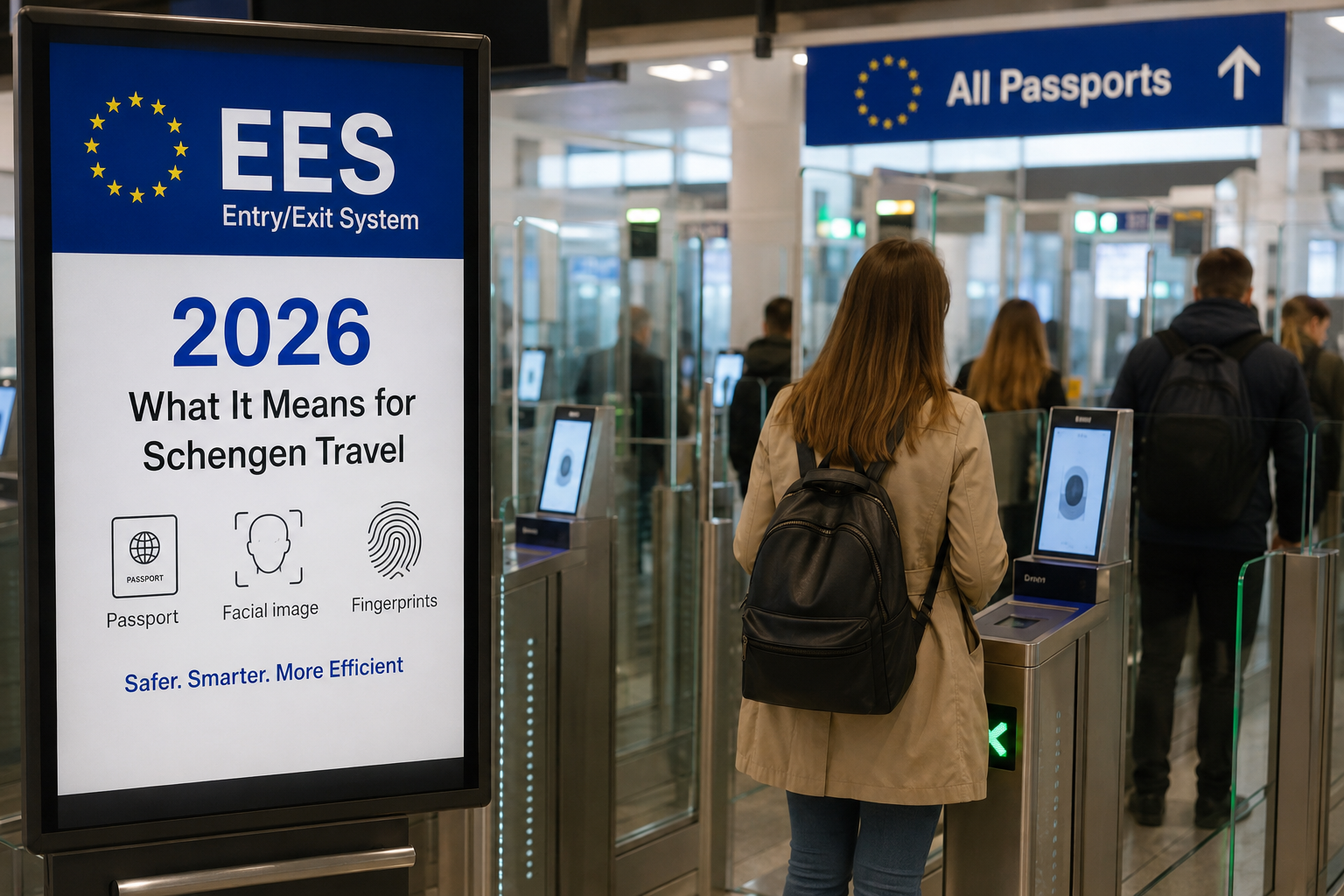
What the EU's New Entry/Exit System Means for Your Schengen Travel in 2026Europe has quietly changed how it checks who comes in and who goes out — and if you travel to Spain or anywhere else in the Schengen Area, it's worth understanding before your next trip.What is the EES?The Entry/Exit System (EES) is the EU's new digital border system. It replaces the old manual passport stamp with biometric registration — a facial scan and fingerprints — recorded automatically every time a non-EU national crosses an external Schengen border. The system began rolling out in October 2025 and became fully operational across all external Schengen borders on April 10, 2026.Who does this affect?It applies to all non-EU nationals — that means anyone who isn't a citizen of an EU country, Iceland, Liechtenstein, Norway, or Switzerland. This includes both visa-exempt travelers and those who need a Schengen visa to enter. If your nationality requires a visa, you'll still apply for that visa as before — the EES registration then happens automatically at the border once you arrive.What actually happens at the borderOn your first crossing, you'll have your passport scanned and a facial photo taken; travelers with biometric passports can often do this themselves at a self-service kiosk where available. After that initial registration, future crossings are faster — the system already has your data on file.Why this matters more than it seemsThe biggest practical change is around the 90/180-day rule. EES automatically tracks how many of your 90 allowed Schengen days you've used — and it does this cumulatively across every Schengen country, not per country. In the past, some travelers stretched their stays by moving between countries and relying on inconsistent stamping. That's no longer possible: the system tracks days across the entire zone, with nowhere to hide.A heads-up for this summerSince becoming fully operational, the EES has caused longer lines and some confusion at airports and land borders during the early rollout period, simply because it's new. If you're planning travel during peak season, it's wise to arrive at the airport with extra time, especially for your first registration.One more system on the wayEES is separate from ETIAS, a different travel authorization that visa-exempt travelers will eventually need before departure. ETIAS is expected to launch later in 2026, and the two systems will work alongside each other once it does.The bottom lineIf you're a non-EU national with property, business interests, or family ties in Spain, or simply travel here often, your entry and exit are now tracked precisely and automatically. Keeping accurate track of your own Schengen days — rather than relying on stamps — is now essential, particularly if you're applying for or renewing a residency status.